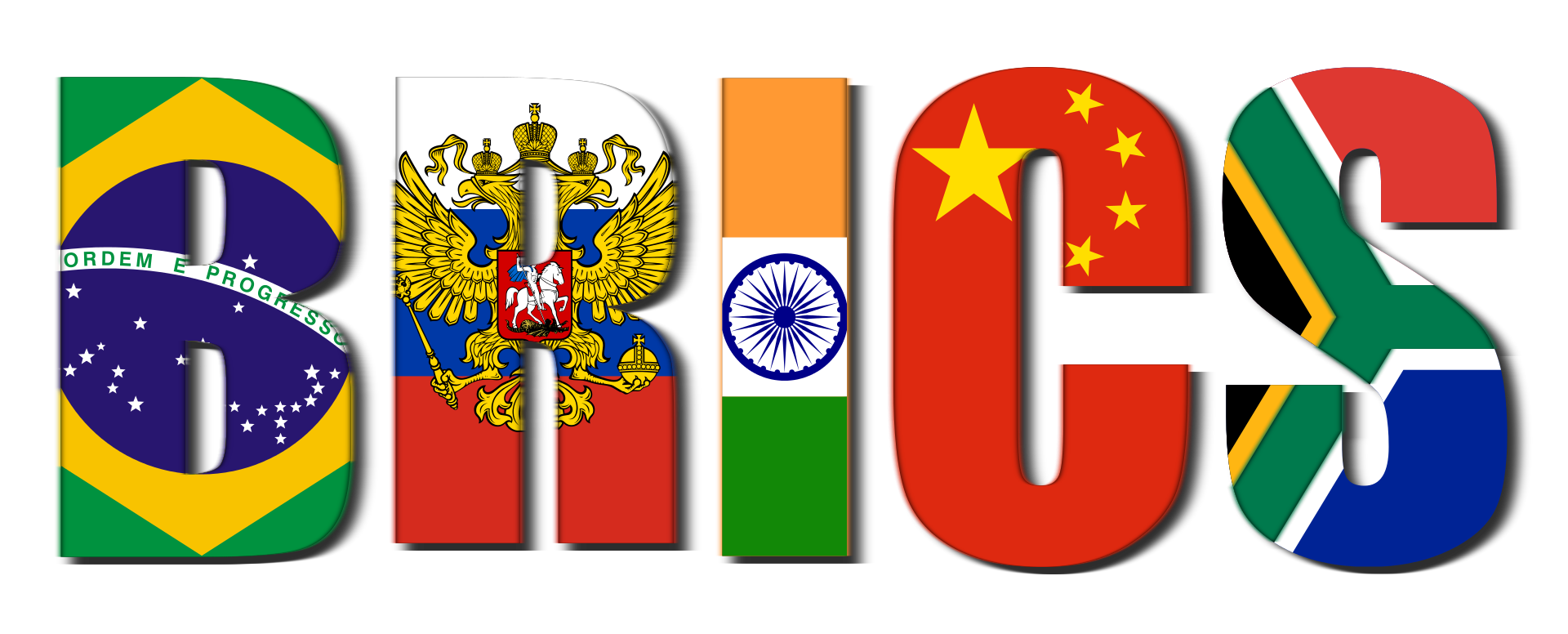
BRICS is an acronym that stands for the group of five major emerging national economies: Brazil, Russia, India, China, and South Africa. These countries formed the BRICS association in 2006 to promote stronger cooperation among them and with other countries in the global economy. The group aims to address various global challenges, such as economic growth, international trade, climate change, and political issues. BRICS nations together represent a significant portion of the world's population, GDP, and economic growth potential. They represent a considerable portion of the global population and economy and have been advocating for a more equitable global governance system. While they face several challenges, they continue to collaborate in areas like finance, energy, and technology to promote growth and development.
BRICS national economies in detail:
-
Brazil: Brazil, the largest country in both South America and the BRICS bloc, has a diverse economy with significant sectors in agriculture, manufacturing, and services. It is the world's 11th largest economy by nominal GDP and the 6th largest by purchasing power parity. Brazil's political system is a federal presidential representative democratic republic. The country has faced economic challenges in recent years, including high inflation and a recession, but has shown signs of recovery.
-
Russia: Russia, the largest country globally by land area, has a mixed economy with dominant sectors in oil and gas, mining, and manufacturing. It is the 11th largest economy by nominal GDP and the 6th largest by purchasing power parity. The Russian political system is a federal semi-presidential republic. The country has been through significant political changes in recent years, including the annexation of Crimea and tensions with the West.
-
India: India, the world's seventh-largest country by land area, has the sixth-largest economy by nominal GDP and the third-largest by purchasing power parity. Its economy is primarily driven by the service sector, followed by agriculture and manufacturing. India's political system is a federal parliamentary democratic republic. The country has been making strides in various sectors, including technology, infrastructure, and social welfare.
-
China: China, the world's third-largest country by land area, has the second-largest economy by nominal GDP and the largest by purchasing power parity. Its economy is characterized by rapid industrialization, with significant sectors in manufacturing, construction, and services. China's political system is a one-party socialist state led by the Communist Party of China. The country has experienced remarkable growth in recent decades, transforming it into a global economic powerhouse.
-
South Africa: South Africa, the southernmost country on the African continent, has a diversified economy with substantial sectors in mining, manufacturing, and services. It is the 34th largest economy by nominal GDP and the 36th largest by purchasing power parity. South Africa's political system is a parliamentary representative democratic republic. The country has faced challenges such as income inequality, unemployment, and political corruption but has made progress in areas like human rights and social welfare.
History: BRIC TO BRICS
The idea of BRICS was first proposed by Goldman Sachs economist Jim O'Neill in 2001. However, the term "BRIC" was first used in a 2003 report by the same economist. The first BRICS summit took place in 2009 in Russia, and South Africa joined the group in 2010, making it BRICS.
BRICS Cooperation:
The BRICS nations have been working together to enhance their economic and political ties through various initiatives, such as the New Development Bank (NDB) and the Contingent Reserve Arrangement (CRA). These collaborations aim to promote economic growth, financial stability, and development within the member countries and beyond.
Economic significance of BRICS:
BRICS countries represent over 42% of the world's population and contribute to about 24% of the global GDP. They have a combined nominal GDP of over $25 trillion, making them significant players in the global economy.
Trade and investment among BRICS:
BRICS countries have been increasing their trade and investment among themselves. In 2019, the intra-BRICS trade amounted to $327 billion, which is a 10.9% increase from the previous year.
Challenges faced by BRICS:
BRICS nations face several challenges, including economic slowdown, inequality, unemployment, and climate change. They also face geopolitical tensions and political instability in some member countries.
Role of BRICS in global governance:
BRICS countries have been advocating for a more equitable and just global governance system. They have been pushing for reforms in international financial institutions such as the IMF and World Bank to give emerging economies more representation and voice.
Collaboration in areas like finance, energy, and technology:
BRICS countries have been collaborating in various fields like finance, energy, and technology. For instance, they established the New Development Bank (NDB) and the Contingent Reserve Arrangement (CRA) to strengthen their financial cooperation.
BRICS New Development Bank and Contingent Reserve Arrangement:
The NDB, headquartered in Shanghai, was established to finance infrastructure and sustainable development projects in BRICS and other emerging economies. The CRA, on the other hand, is a liquidity backup arrangement among BRICS countries to help mitigate short-term balance of payments pressures.
Political and security issues within BRICS:
Political and security issues within BRICS countries include territorial disputes, domestic political instability, and geopolitical tensions. However, they have been working on fostering dialogue and cooperation to address these issues.
Social and environmental concerns in BRICS:
BRICS countries face significant social and environmental challenges, including poverty, inequality, and climate change. They have been collaborating to address these issues through initiatives such as the 2015 Ufa Declaration on Climate Change, Innovation, and Sustainable Development.